

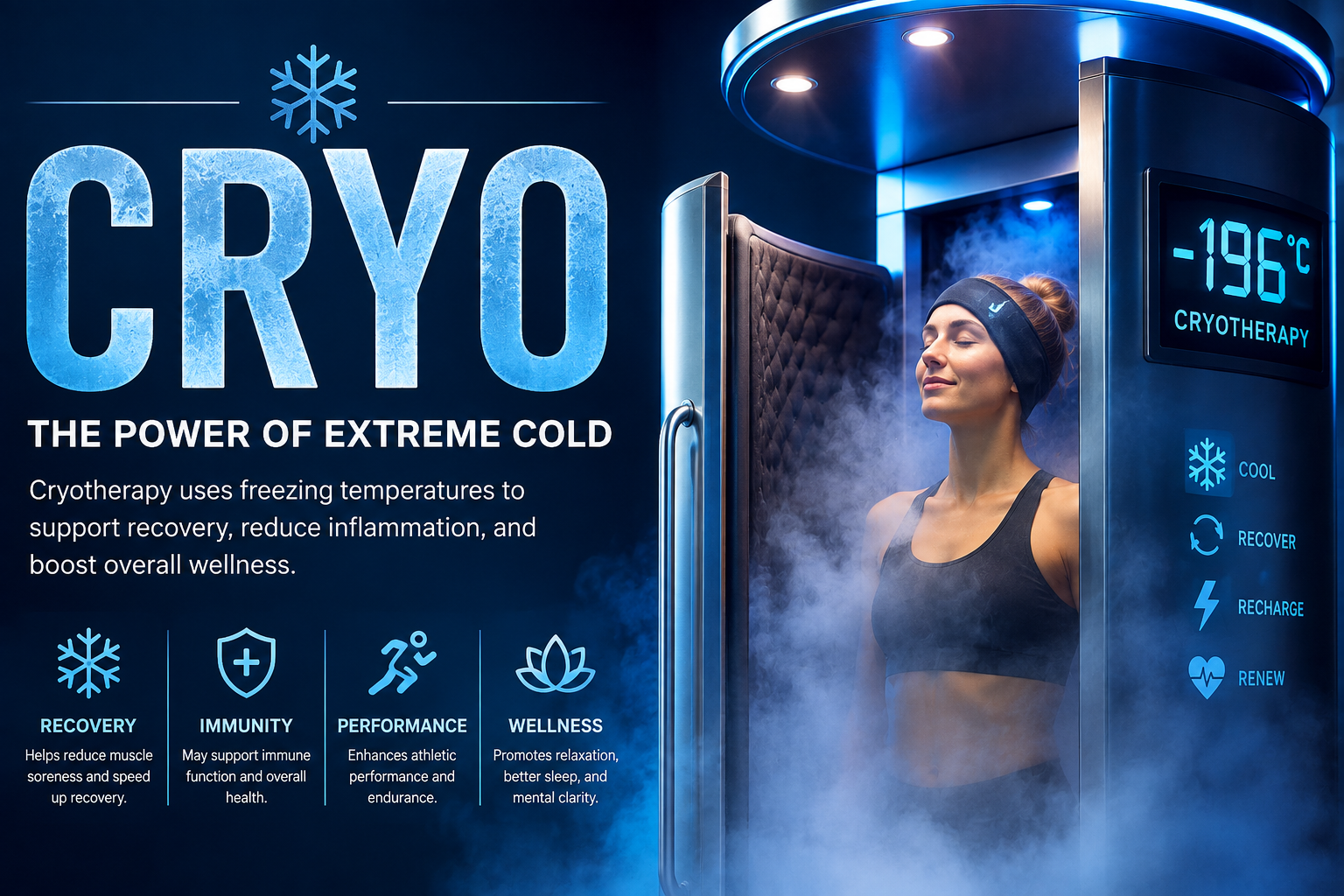
The word cryo appears everywhere today, from medical procedures and athletic recovery to advanced laboratories, superconducting magnets, food preservation, and even science fiction. But what does cryo actually mean? At its core, “cryo” relates to cold, freezing, and extremely low temperatures. The term comes from the Greek word kryos, associated with frost or icy cold, and it has become a convenient shorthand for a surprisingly broad family of technologies and treatments.
The important thing is that cryo is not one single technology. Cryotherapy refers to using cold for medical treatment, while cryogenics is the scientific and engineering field concerned with producing and working with extremely low temperatures. Cryonics, meanwhile, describes the preservation of people after legal death with the hope of future revival, which is very different from established medical cryotherapy or cryogenic engineering. Understanding these distinctions makes the entire subject much easier to navigate.
What Does Cryo Mean?
In everyday language, cryo is often used as a shortened form of cryotherapy, particularly in healthcare, sports, and wellness settings. Cambridge Dictionary defines cryo as a short form of cryotherapy and also recognizes its use in contexts involving cryogenic storage. That explains why you might hear the same word used to describe a medical freezing treatment, a cryogenic laboratory, or a recovery chamber.
Scientifically, however, the word usually points toward much colder conditions. Cryogenics deals with the production and effects of very low temperatures, with approximately 120 kelvin, or −153°C, commonly used as a practical boundary in engineering discussions. NIST describes cryogenics as the science concerned with producing and understanding very low temperatures and notes that the field has historically been associated with temperatures below roughly −150°C. At these temperatures, familiar materials can behave in remarkable ways, and gases that normally exist as invisible vapors can become liquids.
How Cryogenic Temperatures Work
Imagine ordinary refrigeration as gradually turning down the temperature of a room. Cryogenic engineering is more like trying to cool an entire mountain into a snowflake. The closer engineers get to absolute zero, the more difficult removing additional heat becomes. Absolute zero is −273.15°C, or 0 kelvin, and it represents the theoretical lower limit of temperature. NIST explains that absolute zero cannot actually be reached because the required input power would approach infinity.
Cryogenic systems commonly rely on the behavior of compressed and expanding gases. A gas can be compressed, cooled through heat exchangers, and then expanded, producing further cooling. Repeating and refining these processes allows engineers to reach temperatures at which gases such as nitrogen and helium become liquids. Liquid nitrogen boils at approximately 77 K (−196°C), while liquid helium boils at approximately 4.2 K (−269°C) under atmospheric pressure, making them two of the most important cryogenic fluids.
Cryo in Medicine
One of the most practical uses of cryo is cryotherapy, where extreme cold is used to freeze and destroy unwanted or abnormal tissue. Medical professionals can use specialized instruments called cryoprobes, with substances such as liquid nitrogen, nitrous oxide, or compressed argon helping create the required cooling effect. The National Cancer Institute explains that cryotherapy can be used against certain cancers and conditions that may become cancerous.
The basic idea is remarkably direct: instead of destroying tissue with heat, chemicals, or mechanical cutting, doctors can sometimes destroy it by freezing it. During treatment, extremely low temperatures damage cells, and carefully controlled freezing and thawing can cause the targeted tissue to die. Depending on the condition, cryotherapy may be called cryoablation or cryosurgery. Cleveland Clinic also describes cryotherapy as a technique used for conditions ranging from certain skin problems to selected cancers.
This doesn’t mean every medical problem can or should be treated with cryotherapy. Treatment choice depends on the disease, location, size, surrounding structures, and the patient’s circumstances. Because freezing can also damage healthy tissue, medical cryotherapy requires controlled equipment and professional judgment rather than simply applying something extremely cold.
Cryo and Sports Recovery
The word cryo has also become popular in sports and wellness, particularly in connection with cold exposure and recovery. Athletes may encounter localized cold therapy, ice-based treatments, or whole-body cryotherapy chambers. The basic appeal is easy to understand: cold can dramatically change how the body perceives discomfort and can temporarily alter blood flow and tissue temperature.
However, marketing claims around wellness cryotherapy should be separated from established medical applications. A treatment being described as “cryo” does not automatically mean it has been proven to deliver every benefit advertised. Anyone considering extreme cold exposure should pay attention to the specific treatment, its evidence, contraindications, and the qualifications of the provider rather than relying on the word cryo alone.
Cryogenics and Superconductivity
Perhaps the most fascinating side of cryo appears in physics. Certain materials can become superconducting at sufficiently low temperatures, meaning electrical resistance can effectively disappear below a critical temperature. This property allows superconducting magnets to generate powerful magnetic fields without the normal resistive heating associated with conventional electrical conductors.
This is one reason cryogenics has become important in medical imaging and scientific research. NIST notes that niobium-based superconducting materials cooled to around 4.2 K have been used for magnets in MRI systems. Cryogenic technology therefore isn’t simply about making things cold; it can create physical conditions in which materials acquire properties that are extremely difficult or impossible to achieve at ordinary temperatures.
| Cryo area | Main purpose | Typical example |
|---|---|---|
| Cryotherapy | Treat abnormal tissue with cold | Cryoablation |
| Cryogenics | Produce and manage extremely low temperatures | Liquid-gas systems |
| Cryopreservation | Preserve biological materials | Cells, embryos, tissue |
| Superconductivity | Enable special electrical and magnetic behavior | MRI magnets |
| Cryosurgery | Destroy selected tissue using freezing | Certain tumors and lesions |
| Cryonics | Long-term preservation after legal death | Experimental preservation |
Cryo in Biological Preservation
Low temperatures can also slow biological processes dramatically, which makes cryogenic techniques valuable for biological preservation. NIST lists preservation of biological materials such as blood, tissue, embryos, and livestock semen among cryogenic applications. The underlying concept is straightforward: reduce temperature enough to slow or halt many biochemical processes while carefully managing the physical damage caused by freezing.
Yet freezing living material is much more complicated than putting an object into a freezer. Water expands when it forms ice, and uncontrolled ice formation can physically damage cells. Modern cryopreservation therefore depends on specialized procedures, temperature control, storage systems, and protective methods designed to reduce cellular injury. This is a field where the phrase “just freeze it” dramatically understates the science involved.
Cryo vs. Cryonics: Why the Difference Matters
One of the most common sources of confusion is treating cryogenics and cryonics as synonyms. They are not. Cryogenics is an established scientific and engineering discipline involving very low temperatures, while cryonics refers to preserving legally dead humans or animals in the hope that future technology might eventually restore them. NIST specifically distinguishes cryonics from established cryogenic applications and notes that freezing an entire human body for future revival is not an accepted scientific application of cryogenics.
That distinction matters because popular culture frequently blends these concepts together. A science-fiction character sleeping inside a frozen chamber is typically an example of fictional suspended animation or cryonics-inspired storytelling, not ordinary cryogenic engineering. Real cryogenic technology is already incredibly useful, but reversibly freezing an entire human and bringing that person back to life remains outside established medicine.
Why Cryo Technology Matters
The power of cryo technology comes from one simple scientific principle: temperature changes matter. Lowering temperature can change the physical state of gases, modify electrical behavior, slow biological processes, alter material properties, and allow doctors to selectively destroy tissue. Instead of being merely “very cold,” cryogenic environments can act like a completely different physical world.
That is why cryo appears in so many fields. Industrial facilities use cryogenic gases, researchers use ultra-low-temperature systems, hospitals use cryogenic technology in medical equipment and procedures, and scientists investigate superconductivity and other unusual low-temperature phenomena. NIST identifies applications ranging from gas liquefaction and superconductivity to food freezing, biological preservation, and cryosurgery.
The Future of Cryo
The future of cryo will likely be shaped by better cooling systems, more efficient cryocoolers, improved materials, and increasingly precise temperature control. Modern cryocoolers can reduce the dependence on continuously replenished liquid cryogens in some applications, while advanced superconducting materials may expand the practical uses of low-temperature systems. IEEE notes that cryogenic technology already reaches areas including medical diagnostics, space exploration, energy research, and industrial processing.
The most exciting possibilities may emerge where cryogenics intersects with quantum technologies, superconducting systems, space instruments, advanced medicine, and biological preservation. At the same time, responsible development requires engineers and clinicians to treat extreme cold with respect. Cryogenic liquids and equipment can create serious hazards, including severe cold injuries and oxygen-related risks, so professional systems require appropriate insulation, ventilation, monitoring, and safety procedures.
Conclusion
Cryo is far more than a trendy word for cold. It represents a broad collection of technologies and scientific ideas built around the unusual behavior of matter at low temperatures. From medical cryotherapy and cancer treatment to superconducting MRI magnets, biological preservation, industrial gas processing, and advanced scientific research, cryogenic principles have already become part of modern life.
The key is understanding the terminology. Cryotherapy uses cold therapeutically, cryogenics studies and applies extremely low temperatures, cryopreservation focuses on preserving biological material, and cryonics refers to speculative long-term preservation of legally dead organisms. Once those distinctions are clear, the world of cryo becomes less mysterious and much more fascinating.
FAQs About Cryo
1. What does cryo mean?
Cryo generally relates to cold, freezing, or very low temperatures. In everyday medical language, it is often shorthand for cryotherapy, while in science it can refer to cryogenic technologies and processes.
2. How cold is cryogenic?
There isn’t one universally applied boundary in every context, but cryogenics is commonly associated with temperatures below approximately 120 K, or −153°C. NIST describes the field more generally as dealing with very low temperatures and commonly references approximately −150°C as a practical boundary.
3. What is cryotherapy used for?
Cryotherapy can be used to freeze and destroy abnormal tissue. Depending on the medical situation, it may be used for certain cancers, skin conditions, and other abnormal tissues.
4. Is cryonics the same as cryogenics?
No. Cryogenics is an established scientific and engineering field involving extremely low temperatures. Cryonics refers to preserving legally dead people or animals with the hope of future revival, an idea that remains speculative rather than an established medical procedure.
5. Why is liquid nitrogen important in cryo technology?
Liquid nitrogen is widely used because it reaches approximately 77 K (−196°C) at atmospheric pressure and is relatively abundant. It is useful for cooling, freezing, preservation, laboratory work, and industrial processes.