

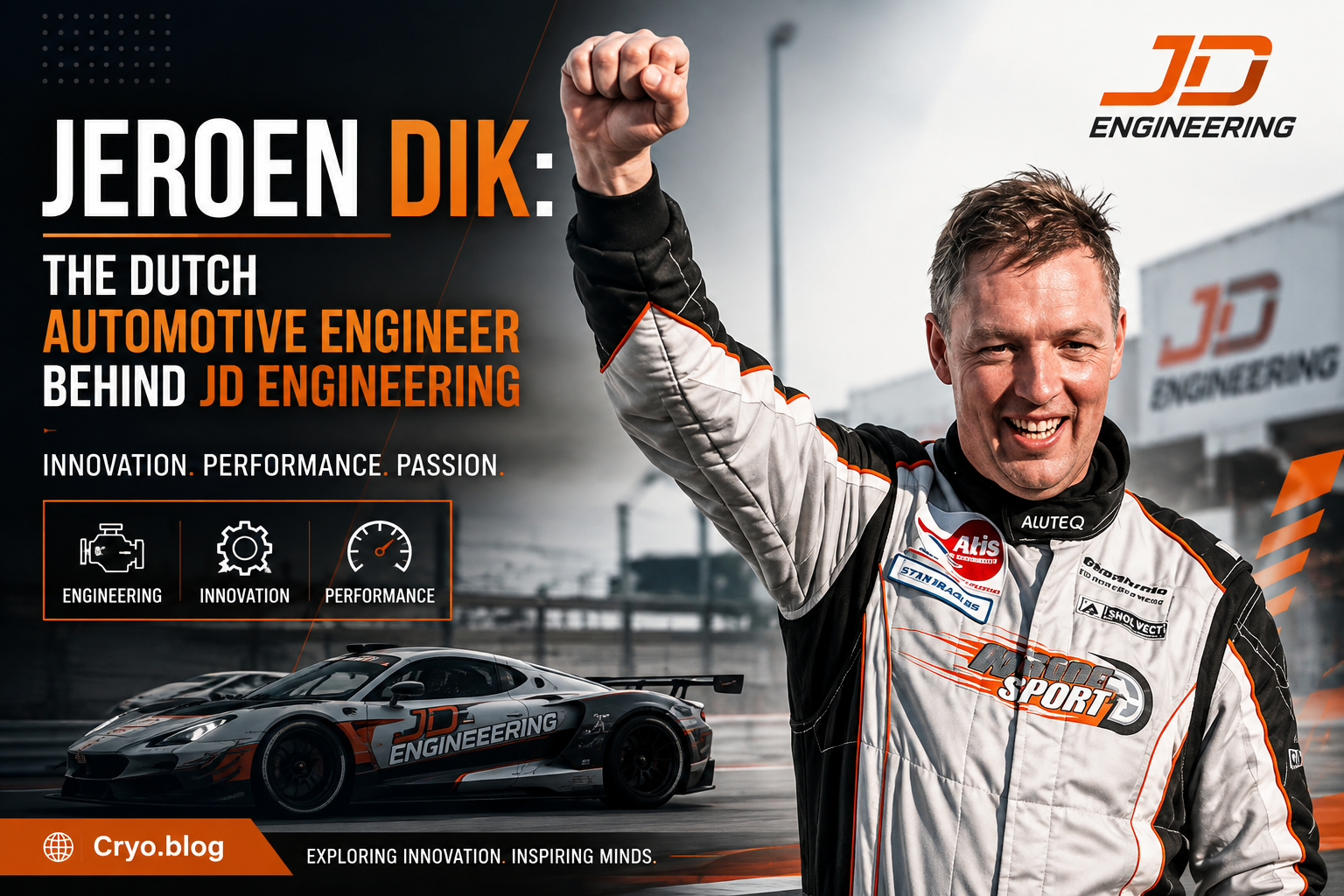
The name Jeroen Dik is now strongly linked to Volkswagen Group performance engineering, vehicle tuning, and motorsports. The name often comes up in conversations about JD Engineering, the Dutch tuning firm connected to Dik, for auto aficionados interested in ECU tuning, engine performance, and well balanced power enhancements. According to publicly accessible information, he started tuning automobiles in the 1990s and initially gained notoriety for his work on Volkswagen G60 models. He is the proprietor of JD Engineering.
The relationship between practical tuning and motorsport is what makes the Jeroen Dik narrative intriguing. His work has come to be associated with the notion that extra horsepower should also be useful, controllable, and suitable for the vehicle, rather than seeing performance as merely a numbers game. In contemporary vehicle tuning, where software, turbocharging, engine management, and mechanical modifications must all cooperate, this theory is particularly pertinent.
Jeroen Dik: Who Is She?
Dutch automotive expert Jeroen Dik is most recognized for his affiliation with JD Engineering, a performance-tuning company situated in Lochem, Netherlands. Dik began tuning automobiles in the 1990s, and his work with Volkswagen G60 models helped the company build a name among fans, according to JD Engineering’s own historical documentation.
The automotive tuning industry has changed dramatically since that period. Older performance modifications often involved mechanical adjustments, while modern vehicles rely heavily on sophisticated electronic control systems. ECU calibration, fuel management, boost control, ignition timing, torque management, and diagnostic systems now play central roles in extracting additional performance from an engine.
Jeroen Dik’s name is therefore particularly relevant to people interested in the evolution of VAG tuning. Volkswagen, Audi, SEAT, and Škoda vehicles have developed a large international tuning community, and specialized companies such as JD Engineering have built their reputations by understanding how these platforms respond to software and hardware changes.
The Beginning of JD Engineering
The history of JD Engineering is closely connected with Jeroen Dik’s early interest in performance cars. The company’s own archived material states that Dik began tuning vehicles in the 1990s and became well known for tuning Volkswagen G60 models.
One of the vehicles highlighted in that history is the VW Golf 1 16V G60, which was used successfully in sprint competitions. This combination of tuning and competition helped JD Engineering develop from an enthusiast-focused operation into a professional business.
That transition is important because motorsport provides a demanding environment for performance engineering. A modification that looks impressive on a dyno does not automatically perform well on a track. Heat management, reliability, throttle response, gearing, braking, traction, and consistent power delivery all become important when a vehicle is pushed hard.
Jeroen Dik and Volkswagen Performance Tuning
One of the strongest associations surrounding Jeroen Dik is Volkswagen Group performance tuning. JD Engineering’s archived material features tuning work on vehicles from Volkswagen, Audi, SEAT, and Porsche, including examples such as the Audi S3, VW Golf, Seat Leon, Audi TT RS, Audi R8, and Porsche 996 Turbo.
The popularity of VAG tuning comes partly from the enormous variety of vehicles produced by the Volkswagen Group. Many models share related engine technologies, transmissions, electronics, and platforms, creating a large ecosystem for aftermarket development.
For owners, ECU tuning can potentially change how an engine responds to throttle input, boost pressure, fuel delivery, and torque requests. But good tuning is more complicated than simply increasing a number in software. The calibration needs to work within the mechanical and thermal limits of the particular engine and supporting components.
What Makes Automotive Tuning Important?
Performance tuning is essentially a balancing act. Imagine an engine as an orchestra: increasing the volume of one instrument does not automatically make the entire performance better. The engine, turbocharger, transmission, cooling system, fuel system, exhaust, and software need to work together.
This is where professional calibration becomes important. A tuner has to understand how changes in one area affect another. More boost, for example, can increase cylinder pressure and heat. Additional torque can place greater demands on a clutch, gearbox, driveshafts, and other components.
For that reason, responsible tuning should consider power, torque, drivability, reliability, and operating conditions together. The most impressive result is not necessarily the vehicle with the biggest peak horsepower figure; sometimes the better result is a car that delivers strong performance smoothly and consistently.
Jeroen Dik and Motorsport
Motorsport has played an important role in the story associated with Jeroen Dik. JD Engineering’s historical information describes competition success involving the company’s tuned vehicles, while other recent publications connect Dik with Dutch touring-car competition.
Racing can provide a valuable testing environment for performance engineering because vehicles operate under conditions that ordinary road driving rarely reproduces. Engines are subjected to sustained loads, temperatures rise quickly, and mechanical components experience repeated stress.
That environment can reveal weaknesses that might remain hidden during normal driving. For a tuner, competition therefore provides more than excitement—it can provide practical feedback about whether a particular engineering approach works under pressure.
The Evolution of ECU Tuning
The automotive industry has moved from relatively simple mechanical modifications toward highly sophisticated ECU tuning. Modern engine control units continuously monitor numerous parameters and adjust engine operation according to sensor inputs and programmed strategies.
This has transformed the role of a tuner. Instead of simply changing physical components, modern performance specialists can alter calibration strategies that influence how the engine responds.
However, software tuning still depends on mechanical reality. An ECU cannot overcome every physical limitation. If an engine, turbocharger, cooling system, or transmission is operating beyond its practical limits, software alone cannot create unlimited reliable performance.
That is why the best tuning conversations tend to focus on the complete vehicle rather than one isolated specification.
Why VAG Enthusiasts Know the Name
The Volkswagen Group has one of the world’s largest enthusiast communities. Models such as the Volkswagen Golf, Audi S3, Audi TT, SEAT Leon, and other performance-oriented vehicles have become popular platforms for modifications.
JD Engineering’s archived material demonstrates the breadth of its work across several of these platforms. Its published examples include an Audi S3 2.0 TFSI, Volkswagen Golf 7 2.0 TDI, Seat Leon 1.8 TFSI, Audi A1, Audi TT RS, Audi R8, and Porsche models.
This variety helps explain why searches for Jeroen Dik are often connected with automotive performance rather than a single vehicle. His name is associated with a broader tuning philosophy and a company that has worked with multiple performance platforms.
The Difference Between Horsepower and Usable Performance
One of the biggest misconceptions in car tuning is that horsepower tells the entire story. It does not.
Two cars can produce similar peak horsepower figures while feeling completely different on the road. One might have aggressive power delivery, substantial turbo lag, and difficult throttle control. Another could produce its power progressively and remain comfortable and predictable during everyday driving.
Usable performance considers the entire driving experience. Throttle response, torque delivery, traction, gearbox behavior, thermal management, and reliability can be just as important as the headline horsepower number.
This broader perspective is one reason engineering-based tuning remains relevant even as modern cars become increasingly software-driven.
Jeroen Dik’s Continuing Automotive Legacy
The legacy associated with Jeroen Dik is closely connected to JD Engineering’s long-running presence in the performance-tuning community. Archived company material describes a business that grew from early G60 tuning work into a professional operation with a broader range of performance vehicles.
Today, automotive tuning continues to evolve. Hybrid powertrains, increasingly complex emissions systems, advanced driver assistance technology, and electrification are changing what performance engineering means.
The next generation of tuners will need to understand not only combustion engines and turbochargers but also software architecture, electric motors, batteries, thermal systems, and increasingly sophisticated vehicle electronics.
Final Thoughts on Jeroen Dik
Jeroen Dik represents an interesting chapter in Dutch automotive performance culture. His name is strongly connected with JD Engineering, VAG tuning, motorsport, and the practical pursuit of better vehicle performance. Publicly available company material traces JD Engineering’s roots to the 1990s and highlights its early reputation for Volkswagen G60 tuning and competition-oriented development.
The larger lesson from this story is that automotive performance is about more than chasing maximum numbers. Good tuning requires understanding how power, torque, software, mechanical components, heat, traction, and reliability interact.
For enthusiasts searching for Jeroen Dik, that combination of motorsport experience and performance engineering is what makes the name worth exploring. His association with JD Engineering provides a useful window into how specialist tuning businesses can grow from enthusiast projects into recognized names within the European performance-car community.